MAD//FEST 2026: Our key takeaways
What Louis Theroux, a provocation about Mounjaro and Aston Villa Women reminded us about curiosity and the power of bringing people together.

People before platforms
Three reflections from MAD//FEST 2026
Introduction
MAD//FEST 2026 was built around The Human Touch: an exploration of what human creativity, cultural understanding and genuine connection can offer in an increasingly automated world.
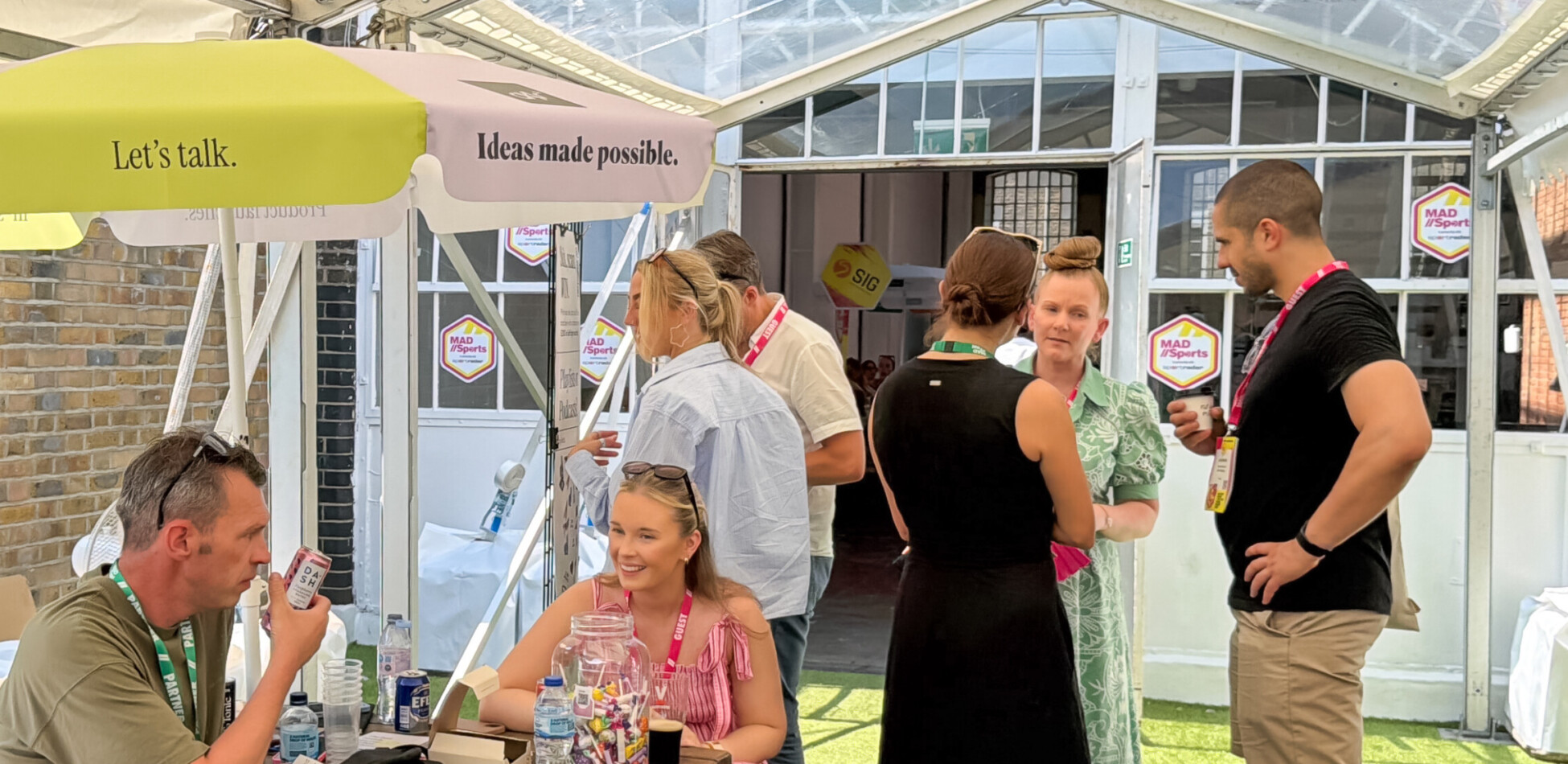
It was a theme that felt particularly relevant to us at D4R, where so much of our work is about translating brand ideas into experiences people can physically enter and shape perception.
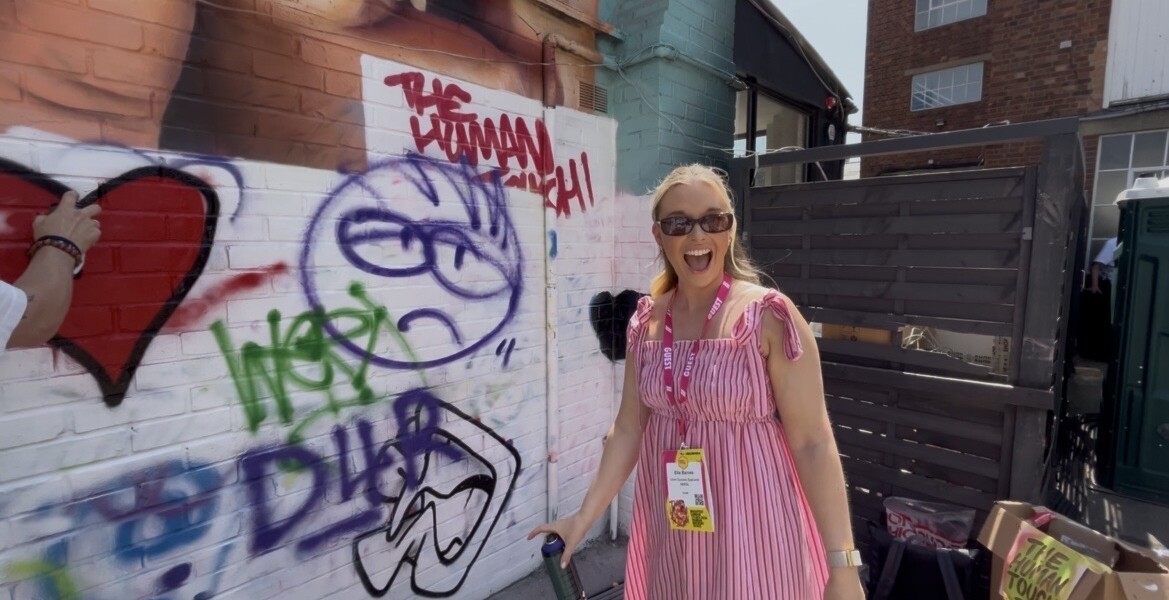
Across three days in the Boiler House Garden, we invited visitors to answer a different question:
Pineapple on pizza: yes or no?
Playlist or podcast?
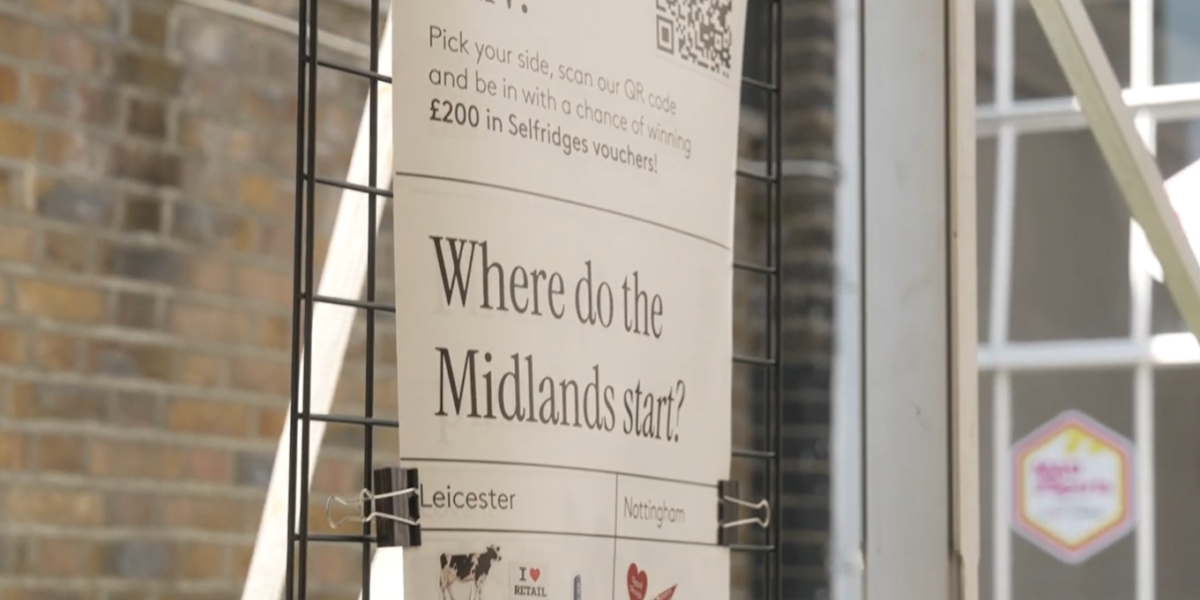
Where do the Midlands actually start?
None of them was especially serious. That was the point.
They gave people permission to relax, have an opinion and reveal something small about themselves. From there, more meaningful conversations followed naturally. It reinforced something we have long believed: connection does not always begin with a profound question. Sometimes it begins with a shared laugh, a strong opinion or the discovery that someone else listens to exactly the same podcast.
That idea stayed with us throughout the festival, particularly during three talks that approached human behaviour from very different directions.
Curiosity is a creative advantage
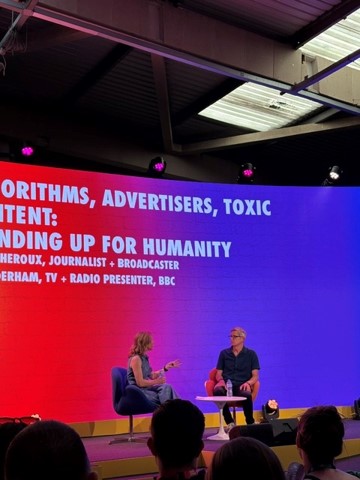
Louis Theroux’s session, “Algorithms, Advertisers, Toxic Content: Standing Up for Humanity,” explored the responsibility marketers, brands and platforms have in shaping online culture. The conversation centred on empathy, nuance and the importance of retaining our humanity in spaces that can increasingly feel polarised and detached.
But one of our biggest reflections was not solely about algorithms or technology. It was about curiosity.
Theroux’s endless fascination with people has become his superpower. His work repeatedly takes him into unfamiliar, complicated and uncomfortable situations. Rather than arriving with a predetermined answer, he asks questions, listens and allows people to show him how they see the world.
That approach has a great deal to teach marketers.
Data can tell us what someone purchased, where they clicked or how long they spent looking at something. It cannot always explain what they were feeling, what they almost chose or why a seemingly insignificant detail made an experience memorable.
Understanding those things requires genuine curiosity.
It means resisting the temptation to flatten people into audience segments. It means asking questions without already deciding what the answer should be. It also means becoming comfortable with the fact that the most useful insight may challenge the original brief.
Physical brand experiences are particularly valuable because they allow that curiosity to become part of the design. Brands can observe how people navigate a space, what they gravitate towards, where they pause and how they interact with one another. Visitors can respond, make choices and take the experience in directions that cannot always be predicted in advance.
The strongest experiences do not simply communicate something to people. They create enough space to learn something from them.
Our own questions at the stand were a small example of this. They were deliberately low-stakes, but they opened the door to personality. Once someone had defended pineapple on pizza or attempted to draw the northern boundary of the Midlands, the conversation felt less like networking and more like two people getting to know one another.
Sometimes, getting comfortable with discomfort begins by making someone else feel comfortable enough to participate.
When impulse weakens, relevance has to work harder
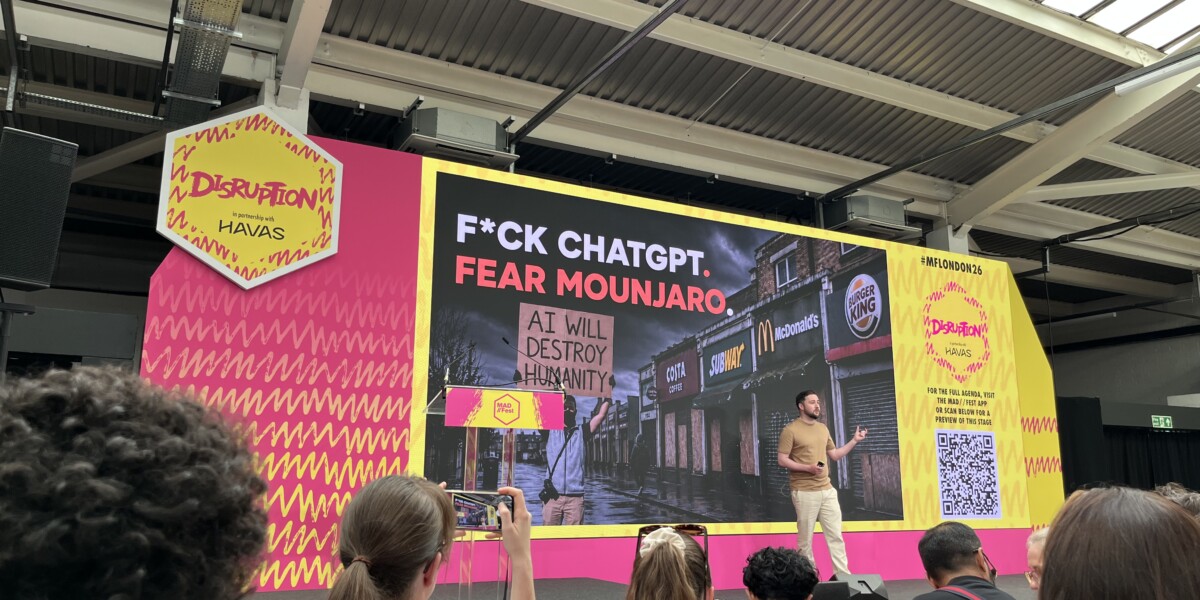
The title of Paul McGinley’s session was deliberately provocative: “F*ck ChatGPT, Fear Mounjaro.” While much of the marketing industry is understandably focused on artificial intelligence, the talk asked whether a more fundamental change in human appetite and behaviour could have an even greater impact on consumer markets.
Emerging research supports the idea that GLP-1 medications are changing food purchasing patterns. A Cornell and Numerator study found that households with at least one GLP-1 user reduced grocery spending by 5.3% within six months of adoption, with particularly significant changes in calorie-dense and impulse-led categories.
That evidence relates specifically to food purchasing, rather than consumer behaviour as a whole. Nevertheless, it raises a much broader question for brands:
What happens when people become more deliberate about what they consume?
Many retail categories have traditionally benefited from habit, convenience, appetite or spontaneous desire. When those impulses weaken, it becomes harder to rely on visibility alone. Being placed in front of someone is no longer enough. The product, message or experience has to feel genuinely relevant to the person encountering it.
This changes the role of personalisation.
Personalisation cannot simply mean placing someone’s name on a screen, pack or email. It should demonstrate an understanding of their needs, preferences, routines and context. It should help people discover something suited to them, rather than attempting to persuade everyone to want the same thing.
Triyit offers an interesting example. Its data-driven product trial model enables brands to select audiences using attitudes, behaviours, lifestyle choices, shopping habits and specific needs—not just broad demographics. Products are then experienced in the consumer’s own home, where they can be tried as part of real life rather than encountered as an abstract advertising claim.
The consumer gets an experience that feels more personally appropriate. The brand gets authentic feedback, insight and content from people who are genuinely relevant to the product. Triyit describes this as creating targeted, educational brand experiences and collecting genuine pictures, videos, ratings, reviews and testimonials.
There is an important lesson here for physical consumer brand experiences.
Rather than treating sampling as a handout or personalisation as decoration, brands can make trial part of a meaningful value exchange. People might customise a product, compare different formats, select something based on their needs, contribute feedback or see how it fits into their lives.
The result is not simply greater engagement for its own sake. It is a more useful interaction.
As consumers become more selective, experiences will have to work harder to earn attention. The answer is unlikely to be more noise. It will be better relevance.
The experience does not end at the final whistle
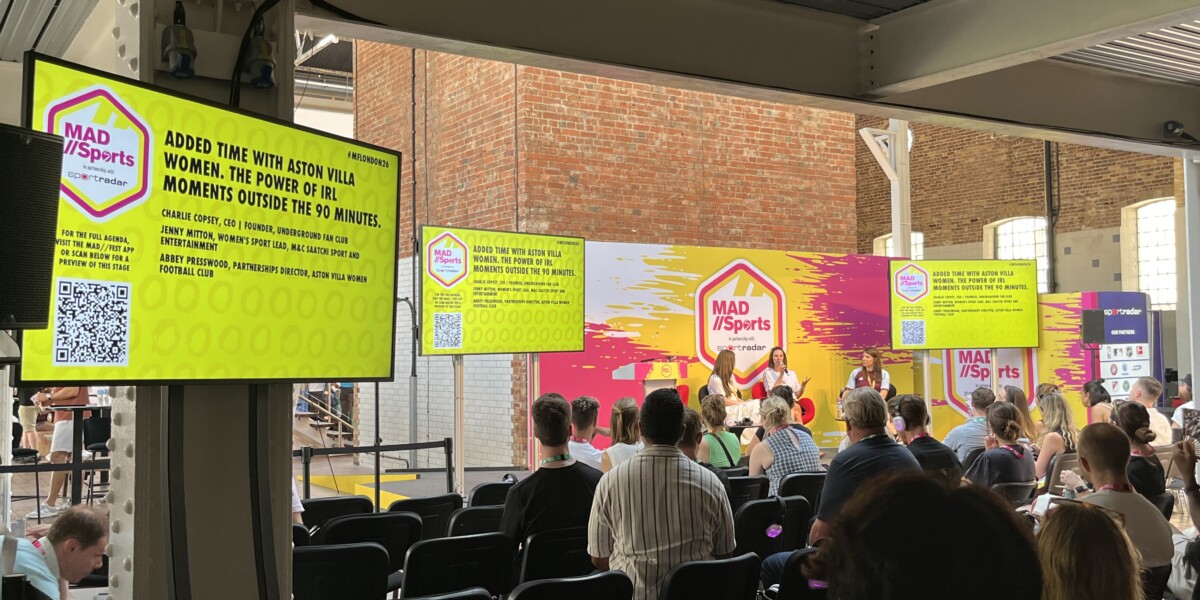
The third session that stayed with us was “Added Time with Aston Villa Women: The Power of IRL Moments Outside the 90 Minutes,” featuring Jenny Mitton, Abbey Presswood and Charlie Copsey.
The panel explored the importance of everything that happens around a match: the anticipation, arrival, rituals, conversations and celebrations that turn a sporting event into a shared cultural experience.
These moments are especially important when attracting new audiences and building a fan community. People may initially come for the football, but their sense of belonging is often formed through everything surrounding it.
The discussion also raised an important point about women’s football. Its matchday culture does not have to replicate traditions established elsewhere. There is an opportunity to create new rituals with supporters—rituals that reflect the audience, energy and personality of the women’s game.
A strong example was Matchdays Together with Guinness – The Underground After Party, staged after Aston Villa Women’s final home game at Villa Park. The activation extended the day beyond the final whistle with a live DJ, meet-and-greets, fan debate, interactive Guinness moments and opportunities for supporters to remain together in the space.
As shared during the panel, more than 1,000 supporters joined the post-match experience.
The number is impressive, but the reason people stayed is more significant. They were not simply being given another piece of branded content. They were being offered somewhere to continue the feeling of the match together.
That is where brand partnerships can become powerful.
When a brand shares the same ambition as the club, to strengthen community, create rituals and make the day more rewarding, it can play an authentic role in the fan experience. It is no longer interrupting the occasion or placing a logo beside it. It is helping to host it.
For anyone designing an IRL brand experience, the panel offered a useful prompt: do not only design the central moment.
Think about what happens before people arrive, how anticipation is built, how strangers are encouraged to interact and what gives them a reason to stay once the main event has finished. Sometimes the most meaningful part of an experience takes place in the “added time” around it.
Three talks, one shared idea
Louis Theroux reminded us to remain curious.
“F*ck ChatGPT, Fear Mounjaro” challenged brands to become more relevant as consumer behaviour changes.
Aston Villa Women demonstrated how physical moments can transform an audience into a community.
Together, the three talks reinforced the same idea: people do not want to be processed. They want to be understood, invited and given a meaningful part to play.
That does not mean every brand experience needs to be serious or profound. Our conversations at MAD//FEST certainly did not begin that way.
They began with pizza, playlists and an ongoing geographical dispute.
But those questions worked because they gave people an easy way in. They created participation before presentation. Personality came before the pitch, and the resulting conversations were more open because of it.
A meaningful experience does not always announce itself as meaningful. Often, it begins with a simple invitation and becomes meaningful through what people bring to it.
That is the reflection we are taking back into our work at D4R: to design less for audiences to move through and more for people to step into, influence and remember.
Let’s carry on the conversation…