Food for thought: Gastronomy and the future of retail
A look at how taste, ritual and food culture are inspiring a new generation of physical brand experiences.


A recipe for experience
Gastronomy has moved far beyond the plate, becoming an increasingly influential ingredient in how brands create places, experiences and communities.
Introduction
Food has an unusual ability to bring together memory, ritual, culture and sensory experience. As the boundaries between retail, hospitality and lifestyle continue to blur, brands are increasingly drawing on these qualities to create environments that feel richer and more human.
Cafés are appearing inside fashion stores, culinary rituals are shaping customer journeys and familiar ingredients are being reinterpreted through materials, art and design. Rather than simply adding food and drink to a space, the most interesting concepts are using gastronomy to encourage people to pause, discover, participate and connect.
Here are five projects exploring what happens when food culture and physical experience meet.
5. The Mandarin, New York City
The Mandarin demonstrates how a hospitality identity can become an expression of culture rather than simply an aesthetic exercise.
Located in Manhattan’s Two Bridges neighbourhood, the café and bar was founded by a Chinese-Canadian and Dutch couple whose backgrounds became central to the concept. Its identity draws on the symbolism of the mandarin fruit, associated with prosperity and good fortune in Chinese culture, alongside the significance of the number eight. These ideas were translated into a flexible visual system based around the eight letters of the café’s name.
What makes the project particularly interesting is the relationship between brand and place. The identity was developed alongside the interior architecture, allowing typography, materials and spatial design to work together rather than exist as separate layers.
It demonstrates how a café can communicate far more than what is on its menu. When culture, identity and environment are considered holistically, hospitality becomes an opportunity to create a distinctive sense of place.


4. Heinz Auto-Mayo-Mat, London

For National Picnic Week, Heinz transformed a familiar supermarket staple into something far more experiential with the launch of the Auto-Mayo-Mat, an automated sandwich vending machine dedicated entirely to mayonnaise-filled creations.
The activation borrowed from Japanese convenience culture, vintage automats and mid-century design to create something deliberately nostalgic and tactile. Retro graphics, character-led illustration and branded packaging extended the idea across every touchpoint, turning a straightforward product promotion into a much more memorable physical encounter.
What makes the project particularly effective is its simplicity. Rather than overcomplicating the experience, Heinz took an everyday ritual, making and eating a sandwich, and gave it enough theatre to become something people wanted to discover, photograph and talk about.
It is a strong example of how food brands can move beyond traditional advertising by creating physical moments that feel playful, unexpected and culturally relevant. In an increasingly digital landscape, the Auto-Mayo-Mat also shows the value of experiences that are tangible, immediate and designed to be encountered in person.


3. Leonidas, Various European locations
For brands where food is the product, the opportunity lies not only in what is being sold, but in how customers discover and experience it.
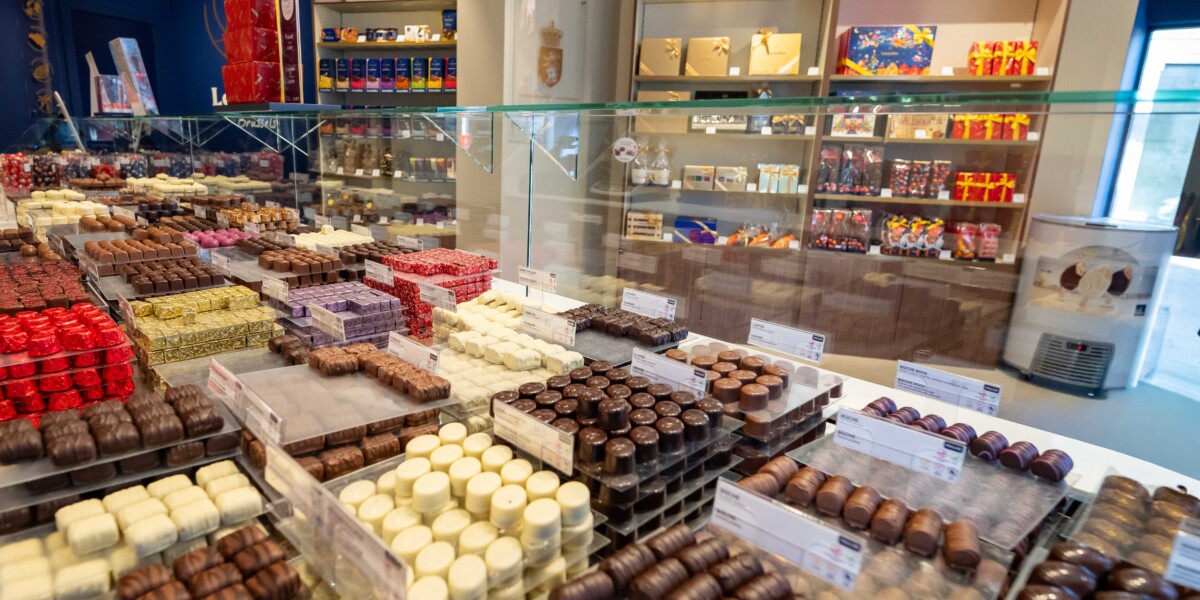
Design4Retail partnered with Belgian chocolatier Leonidas to develop a refreshed, scalable store concept that could support the brand’s future growth while maintaining its established heritage.
The process began with immersion into both the Leonidas brand and the wider confectionery market, including research across stores in Belgium, France and the UK. This helped identify opportunities to simplify the customer journey and create a clearer hierarchy within the retail environment, while retaining the abundance and sense of discovery associated with choosing chocolate.
The resulting concept considered the entire experience, from windows and seasonal storytelling through to merchandising, gifting and the chocolate counter. Importantly, the thinking was designed to flex across a variety of retail formats, including full stores, cafés, shop-in-shops and kiosks.
Following five pilot stores across Brussels and regional France, D4R developed comprehensive retail guidelines to support Leonidas and its franchise network in delivering the concept consistently across future locations.
It demonstrates how gastronomic retail can balance appetite and theatre with clarity and commercial purpose, allowing the product to remain the hero while making the overall experience easier and more enjoyable to navigate.


2. SolidNature x OMA/AMO, Milan Design Week

At Milan Design Week, SolidNature and OMA/AMO took one of the most ordinary gastronomic environments imaginable (the supermarket) and transformed it into something surreal.
Il Sonno reimagined familiar groceries in natural stone, with sculpted bananas, sandwiches and everyday produce filling supermarket-style shelving. Through this unexpected material shift, the installation explored ideas around consumption, permanence, craftsmanship and the value we place on ordinary objects.
Here, gastronomy becomes a visual language rather than a literal dining experience. Visitors already understand the rituals and visual codes of grocery shopping, allowing the designers to disrupt something instantly familiar.
It highlights the creative potential of food culture beyond hospitality. Familiar ingredients and rituals can provide brands and designers with an accessible starting point for exploring much bigger ideas around materiality, culture and consumer behaviour.
1. MyProtein Kitchen, Manchester
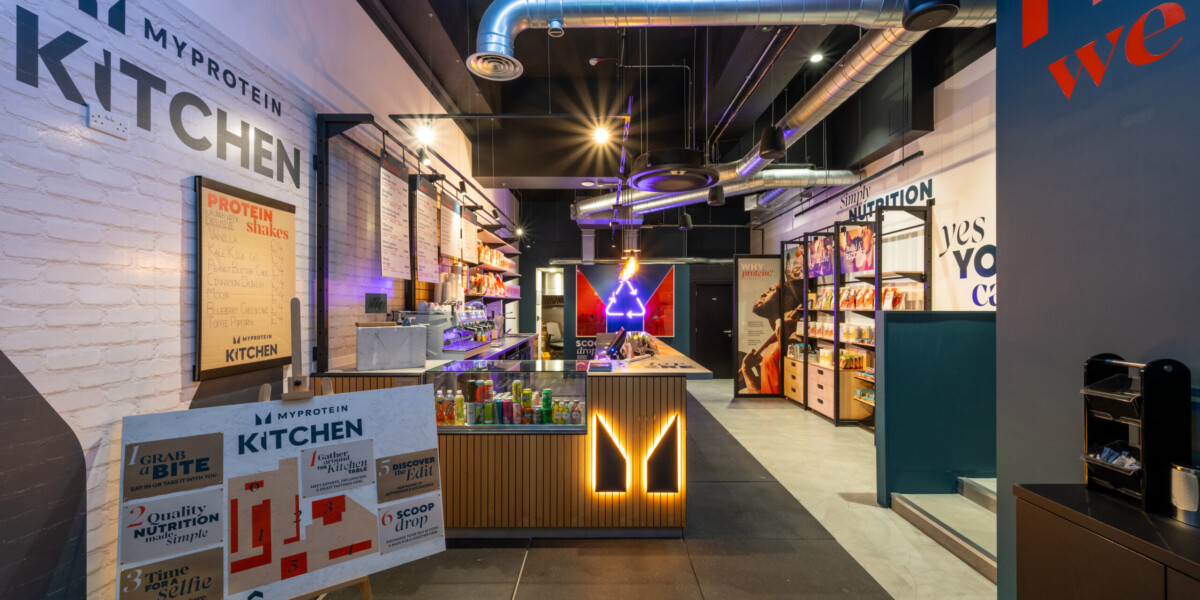
MyProtein Kitchen approached gastronomy from another direction, using food and nutrition as the foundation for a broader lifestyle and community experience.
When MyProtein made its move into physical, community-led retail, D4R helped translate a predominantly digital brand into a tangible destination in Manchester. The environment needed to reflect the brand’s evolution beyond traditional sports nutrition towards a wider conversation around everyday health, wellbeing and lifestyle.
The concept brought together references from the gym and the kitchen. Functional display systems were balanced with warmer, more approachable elements, creating an environment that retained MyProtein’s performance credentials while feeling accessible to a broader audience.
At its heart sat the kitchen itself, serving healthy food and drinks alongside retail areas and flexible community space for events, demonstrations, expert talks and influencer meet-ups. A central kitchen table introduced a place to gather and interact, reinforcing the idea that the environment should facilitate more than transactions.
Through this combination of retail, hospitality and community, MyProtein Kitchen became a physical expression of the lifestyle surrounding the brand, showing how gastronomy can help transform a store into a social destination.


Hungry for more?
These projects form part of a much bigger conversation explored in our latest free downloadable report… Retail Highlights: Gastronomy Edition.
Across the report, we look at how food culture is influencing fashion, hospitality, materials, brand identity and experiential retail, the common thread is a move towards spaces that use storytelling, sensory design and shared experience to build deeper connections between brands and their audiences.

Explore the full Retail Highlight editon…
At Design4Retail, we help brands translate cultural shifts like these into meaningful physical experiences. Our capabilities span brand storytelling, customer experience, pop-ups and activations, retail identity, store design and fit-out, bringing strategy, creativity and implementation together under one roof.
Whether you’re developing a completely new concept, refreshing an existing environment or looking for new ways to connect your brand with customers in the physical world.
Let’s carry on the conversation…