The return of surreal retail
Brands turning to fantasy, spectacle, and absurdist world-building to re-engage audiences.

When store becomes a story
As jaded consumers reject forced relatability, we can see how the attention economy’s obsession with being real has made everything fake.
Authenticity is dead- or at least, it’s no longer the currency brands think it is. In recent years we’ve been living in a chronically online way, where “all the world is a stage”. Modern consumers operate in a space where their individual identity is managed like a brand.
Gen Z reacted to the pressures of this constant self-editing and performing with messy, unexpected content- a mix of authenticity and vulnerability that became an aesthetic. This new desire to share more personally and without filters online- flaws and all- was echoed back at consumers by brands.
From casual, witty, off-brand corporate social media accounts to behind-the-scenes content, every brand wanted to curate an un-curated tone of voice designed by committee to be as unaffected as possible.
Once the use of this relatable content reached saturation point, the idea of brands showing up as ‘just like you’ began to feel unbelievable. Customers developed authenticity fatigue- a tired scepticism toward brand’s performative, relatable realness. Instead, it’s becoming clear that the future isn’t about chasing authenticity at all, but about embracing the surreal, investing in the obviously artificial and performative, delivering a spectacle.
Hyperphysicality in a post-authentic landscape.
Bringing the spectacle
Post-authenticity manifests in fascinating ways. Young consumers, in particular, are increasingly aware of corporate agendas and so search for brands that don’t make authenticity claims at all. There’s honesty in simply identifying and owning what you are, and there is a wonderful excitement about brands who are not trying to be just like their consumer, instead offering more: surrealism, fiction, immersion, and impossible to replicate content and experiences. The brands leading this change are creating their own cultural narratives to deliberately stand apart and be unforgettable.
[Image Credit: Jacquemus, Gentle Monster]
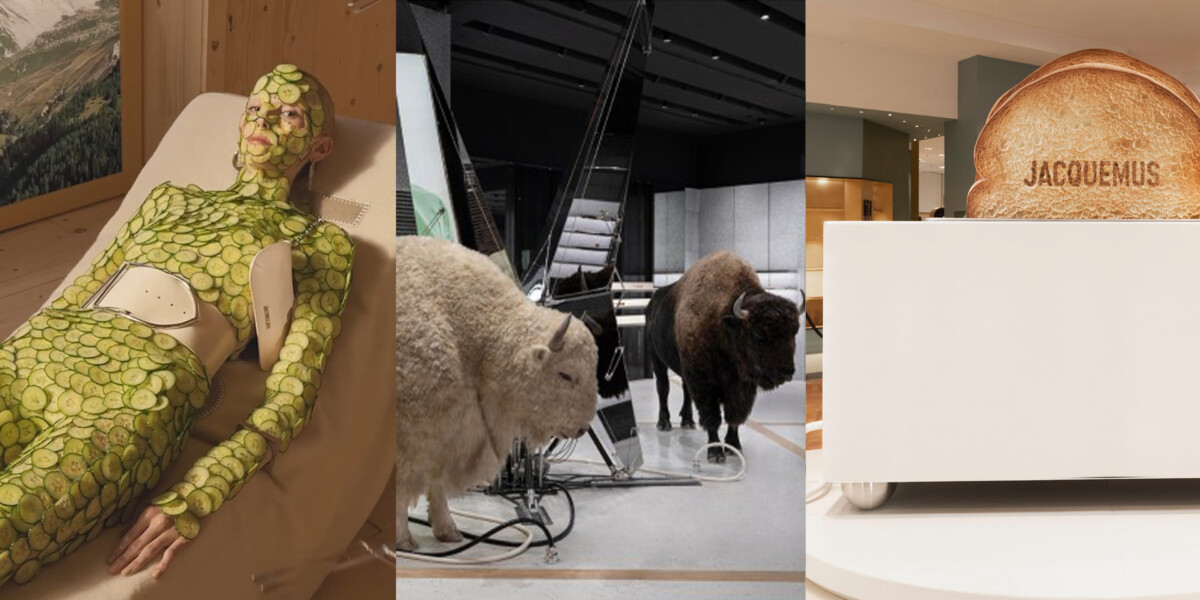
Acknowledging the inauthentic, then leaning into it.
Instead of chasing every viral moment, brands can focus on building a consistent identity that shapes their culture and guides everything they do. World-building is one of the most powerful ways to bring that identity to life. By creating a distinctive universe- complete with stories, characters, and immersive experiences- brands move beyond transactions and give audiences something deeper: the feeling of belonging to something bigger than themselves. It doesn’t matter that these spaces and stories are entirely fabricated, we can’t resist the opportunity to escape reality and delve into the parallel realms presented.
[Image Credit: ms_kuan on Instagram]
World-building can be best seen in the master-class stores from Korean taste-makers and innovators Gentle Monster and their sister brand Tambourins. Both brands have successfully created a retail multi-verse where the rules of reality are suspended; by situating concepts in the present zeitgeist which favours being interesting over being beautiful their all-consuming in-store experiences are constantly pushing the edges of creativity and each store is more surreal and mesmerising than the last.
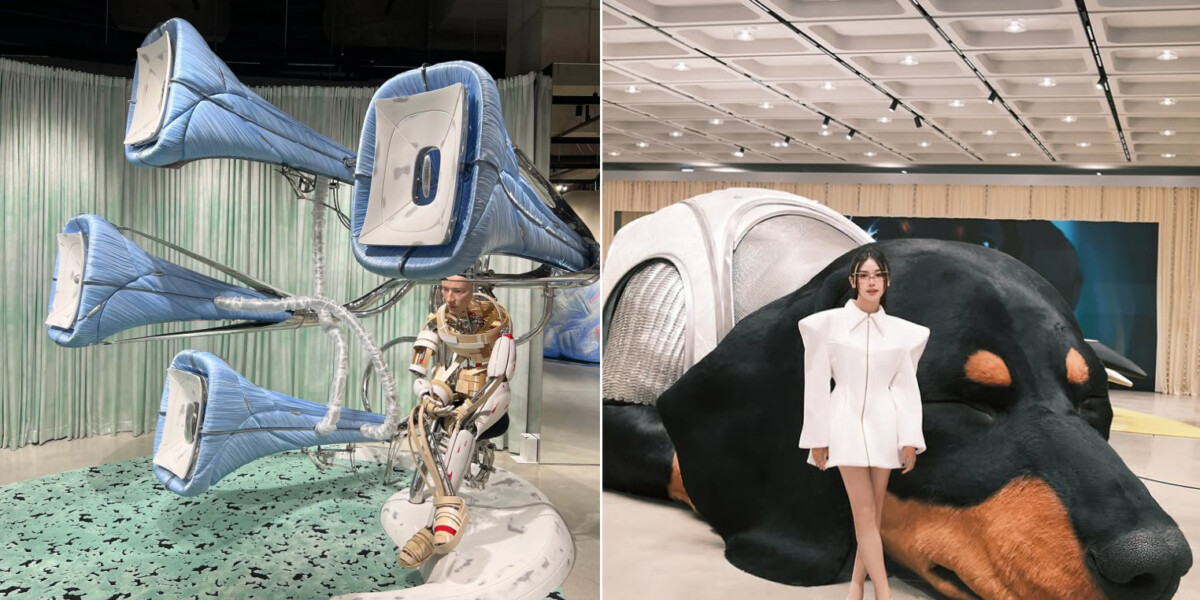
Another reoccurring theme often explored in surreal retail is absurdity- bought to life by use of juxtaposition, culture-clash references, and the totally unexpected. Absurdity and out-of-the box art direction invites shoppers into a world that’s staged and curated, presenting visual feasts.
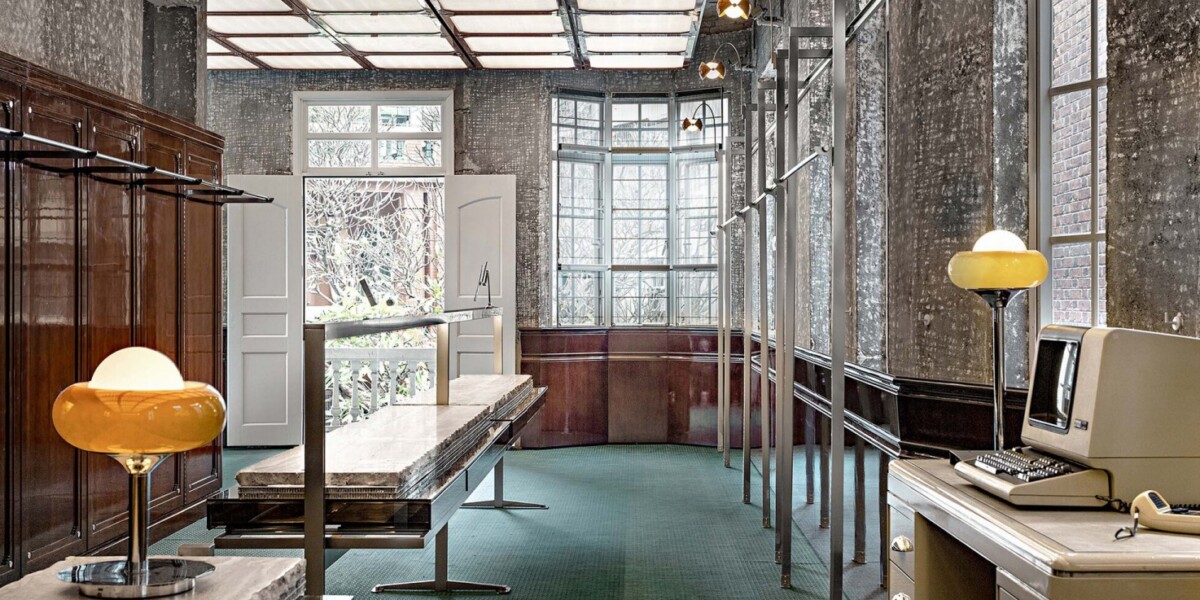
Mason Prince, a Chinese streetwear brand strives to create emotional value through their retail interiors with concepts that aspire to be transportational. The brand describes their stores as portals to spatial narratives, built from scenes and chapters, each vista expressing a different aesthetic, colliding together in unexpected ways to craft visual tension and intriguing storytelling.
The aesthetic blurs the boundaries of time, referencing the past while also offering hint of the future at the same time. For example, the Guangzhou store unfolds like a surreal office, the liminal realms flattened by stark, even lighting then merging into mid-century furnishing, artefacts, and surreal punctuations including a bathtub and fishtank photocopiers. It’s a collision of the ordinary and the absurd, carefully orchestrated to spark curiosity and wonder.
[Image Credit: Free Will photography]
Taking it to the max
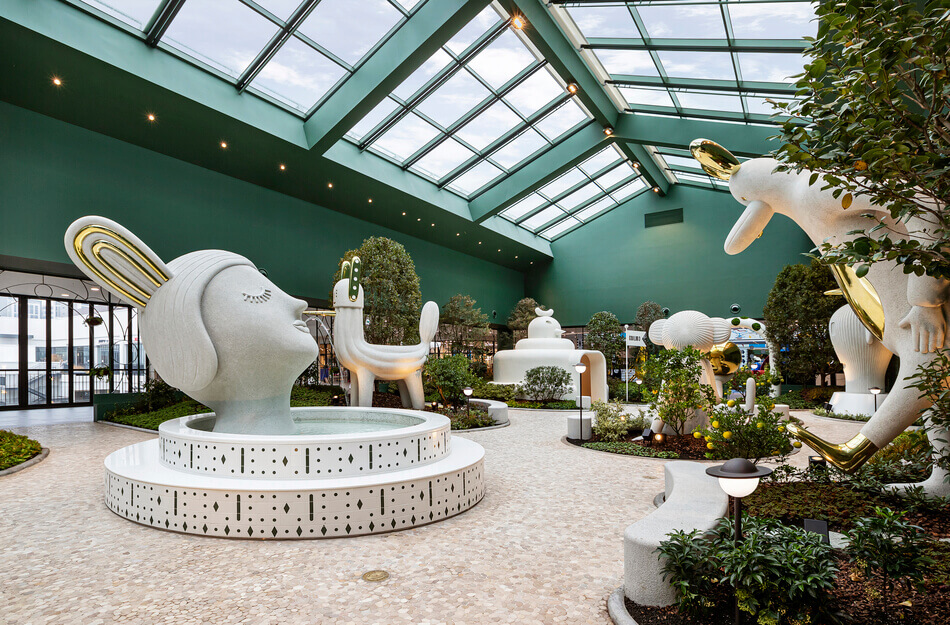
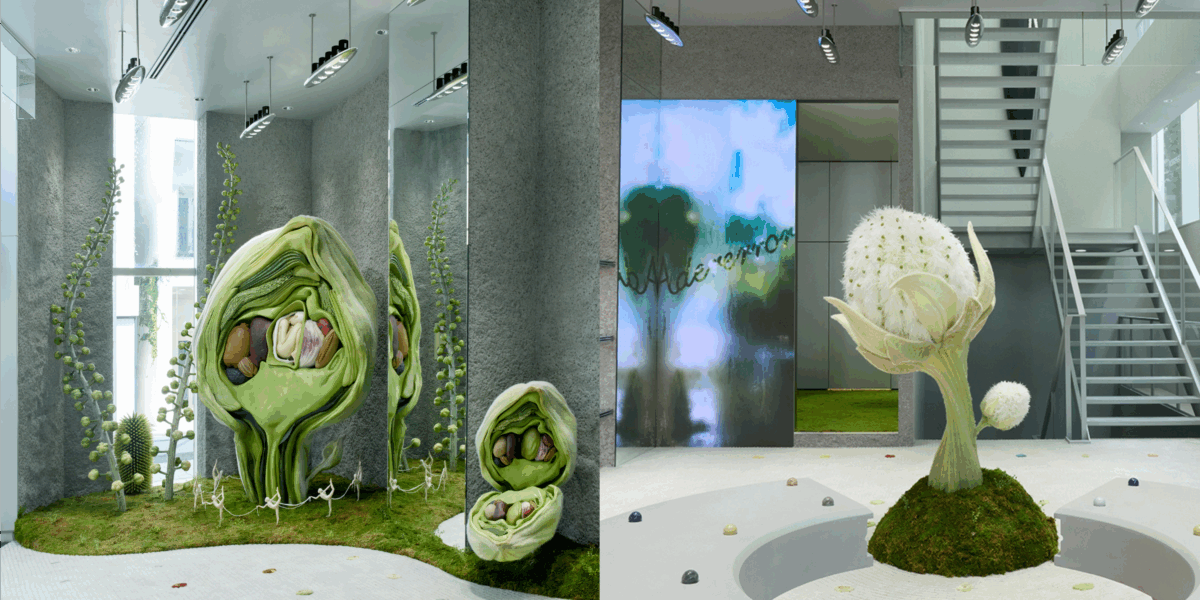
A further key device that can be used to build surreal physical spaces is oversizing everyday objects. In this way, normal objects are reimagined as spectacular stunts. These obviously fake installations act as strategic tools that spark curiosity. Designed for shareability, larger-than-life objects are made to be circulated.
Jacquemus invites audiences to suspend disbelief with a brand world defined by fully immersive thematic spaces and oversize artefacts, a form of visual escapism that provides effortless social content.
The same ethos drives Ader Error’s flagship in Tokyo, which is built around a thematic story thread. Created by collaborating with artists, the brand’s Continuum concept takes customers into a theatrical experience where oversize plants and lifeforms intertwine, bursting from the hyper modern architectural backdrop. The retro metallic textures evoking space and time travel, sharply juxtaposed against the oversized, biologically perfect sculptures to make their unexpected appearance even more surreal.
[Image Credit: Adererror]
Immersive physical encounters
When brands lean into the surreal- obviously fake and whimsical dreamworlds, absurd objects, and unreal CGI spectacles- audiences are captivated. These refreshing alternatives to the ‘authenticity fatigue’ customers experience online satisfy a deep and human longing for connection and inspiration that can only be provided by physical spaces.
Let’s carry on the conversation…