Democratising beauty for everyone
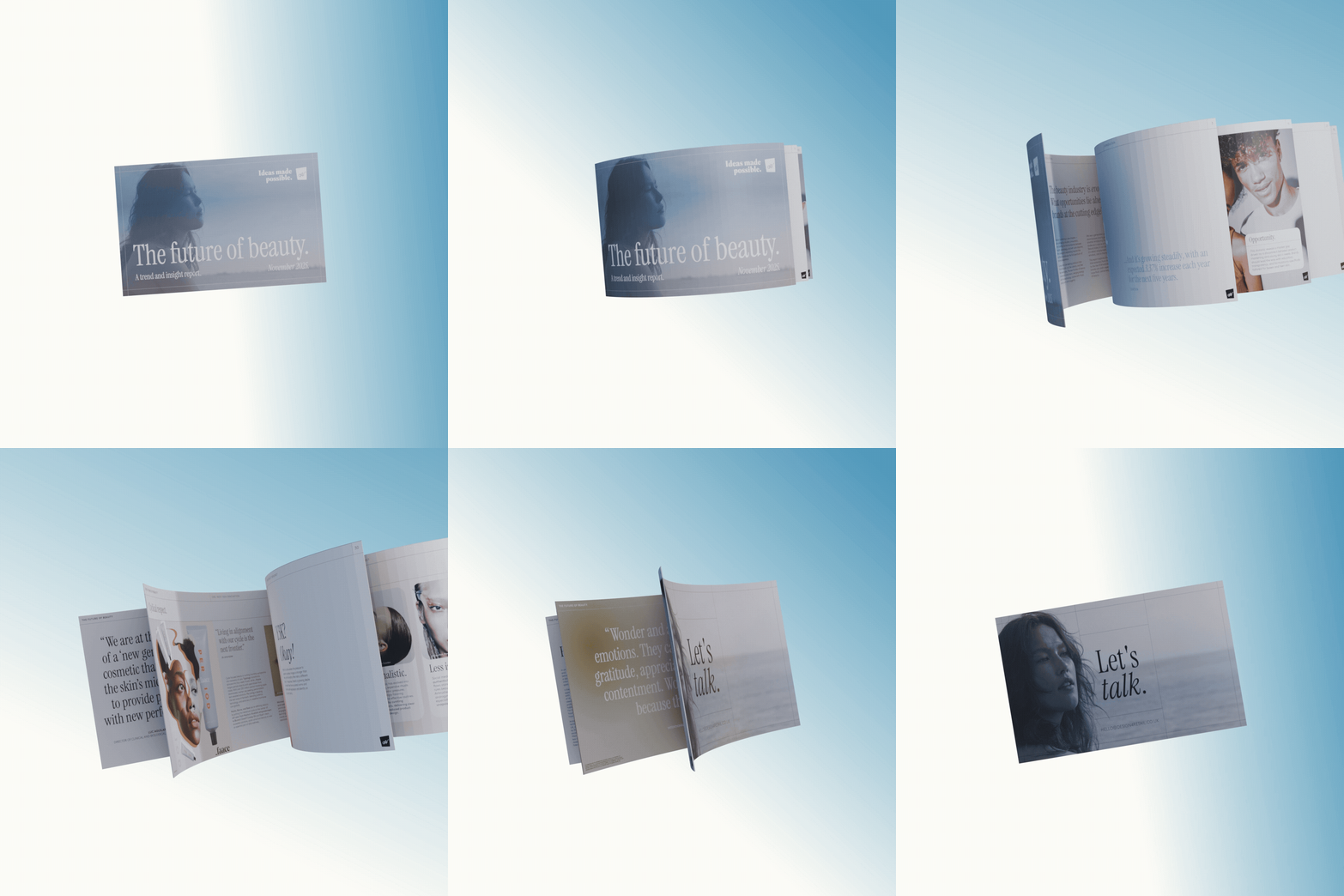
As we look forward from our Future of Beauty insight report, we investigate the radical shifts in beauty retail design that are democratising self-expression for every generation and community.

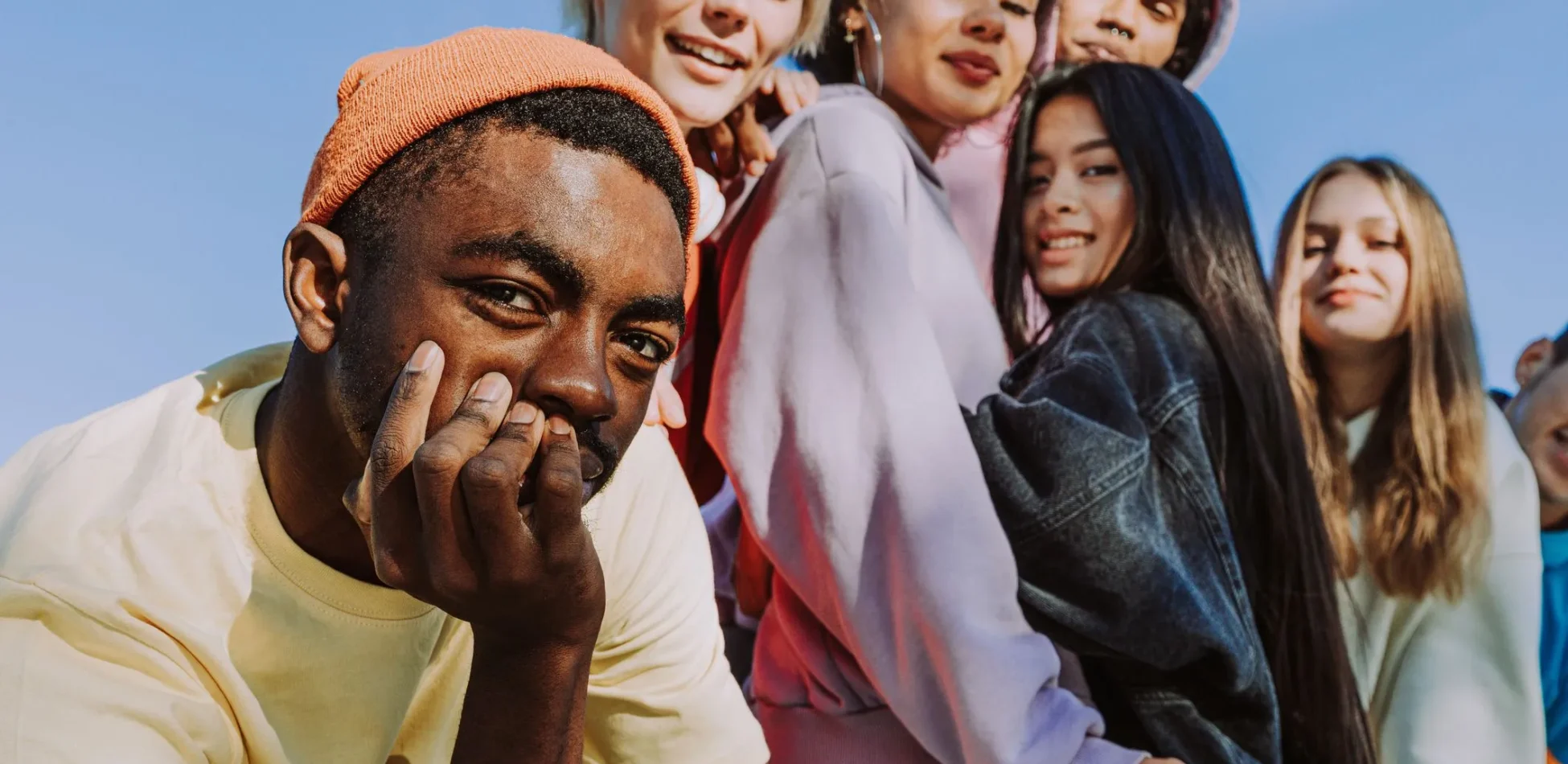
The beauty underground
How is the ‘democratisation’ of beauty being manifested through retail design, ensuring that care and self-expression are accessible to all?
Beauty is evolving from surface to system. From skin to signal. From ritual to intelligence. It moves through neuro-environments and fluid futures, adapts to flat aging and cyclical care, and finds balance between body, data, and planet. AI powers it. Biology personalises it. Culture gives it meaning.
The next era of beauty won’t be bottled it will be lived, learned, and felt. Because the future of beauty isn’t about looking forward it’s about becoming future itself. The future doesn’t perfect the reflection, it redefines it.
In this blog, we aim to provide a well-rounded look at the brands currently innovating across the beauty hemisphere to dismantle traditional barriers. As a retail design agency, we are fascinated by how the industry is shifting toward radical inclusivity and moving beyond token representation to create physical spaces that cater to overlooked demographics.
Our newly launched Future of Beauty report goes even deeper into these systemic shifts. Request the report here.
Or download our curated list of beauty-themed retail highlights to see the innovative store concepts and disruptive designs we’ve been tracking across the globe. Download the highlights here.
Crafting connection
The global beauty sector is currently undergoing a pivotal transformation, fuelled by consumer engagement and a shifting definition of self-care. With global beauty revenue projected to surpass $650 billion in 2025 and the market continuing to grow at a healthy rate, this sector has proven resilient and innovative, consistently outpacing other consumer industries.
This enduring growth is not simply a matter of volume; it is being redefined by consumer values, particularly those of Gen Z and Millennials, who now control over 60% of the market. They are demanding transparency, ethical practice, and highly personalised experiences that resonate with their digital lives and cultural identities.
Let’s get into some of our favourite examples helping to define this shift in contemporary beauty retail design.
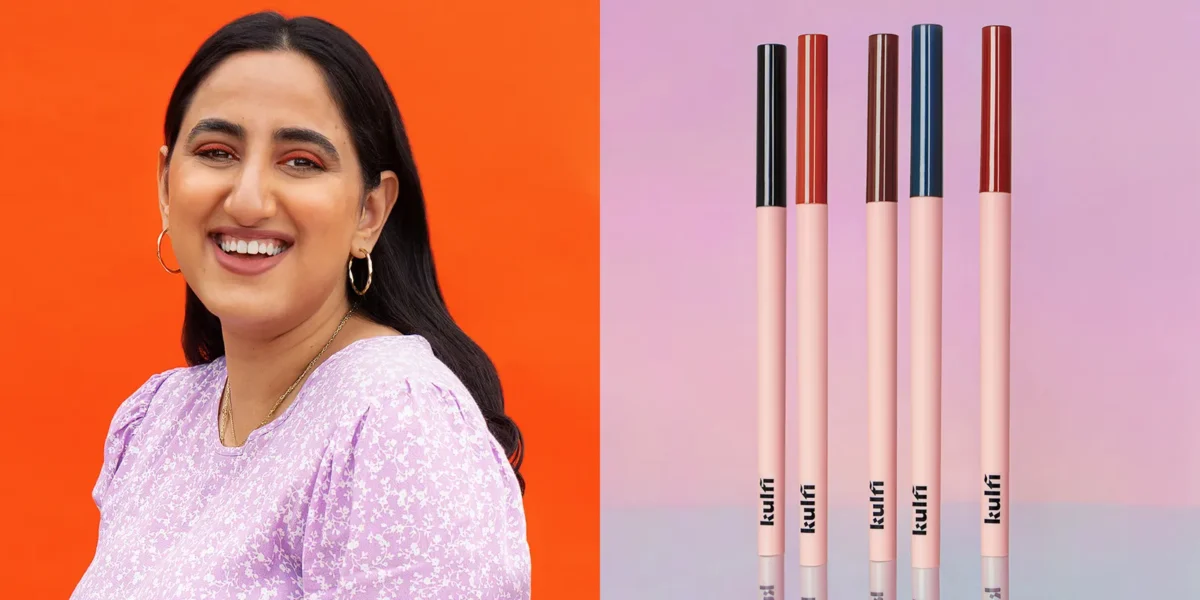
Kulfi Beauty
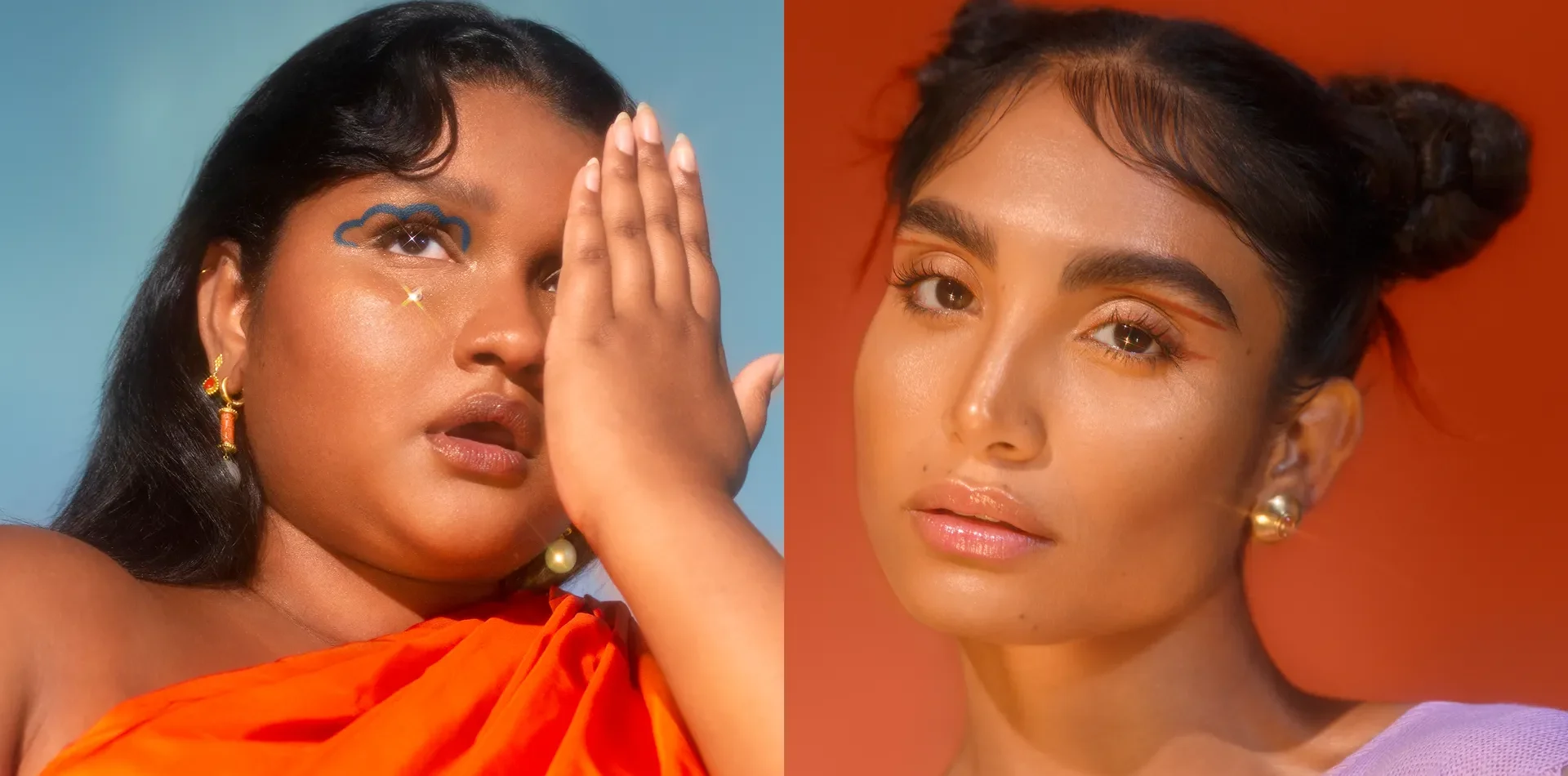
A cornerstone of our exploration into democratised beauty is Kulfi Beauty, a brand that is doing far more than just filling a gap in the shade range; it is actively rewriting the cultural script for South Asian representation. Founded by Priyanka Ganjoo, Kulfi was born from a place of personal reclamation after years of navigating a beauty industry that either ignored South Asian skin tones or viewed them through a restrictive, patriarchal lens. For many in the community, makeup has historically been a tool of correction, used to slim the nose, enlarge the eyes, or lighten the skin to meet Eurocentric ideals. Kulfi disrupts this narrative by centring the brand around the concept of “carefree joy,” named after the colourful, nostalgic South Asian ice cream that defines childhood summers.
Priyanka’s story resonates so deeply because it mirrors a collective unlearning of the “male gaze” and “Nazar” (the evil eye), shifting the focus from how one is seen by others to how one feels within themselves. By launching with vibrant, smudge-proof Kajal eyeliners in shades like terracotta and teal, inspired by the iridescent silk of saris, Kulfi invites users to treat makeup as a “beauty playground” rather than a set of rules. It is an invitation to be playful, to be silly, and to embrace features that were once stigmatised, like thick brows or deep olive undertones. In this new era, beauty isn’t about perfecting a reflection to fit a standard; it’s about the delight of self-expression and the freedom to be unapologetically yourself.
Tween Skincare
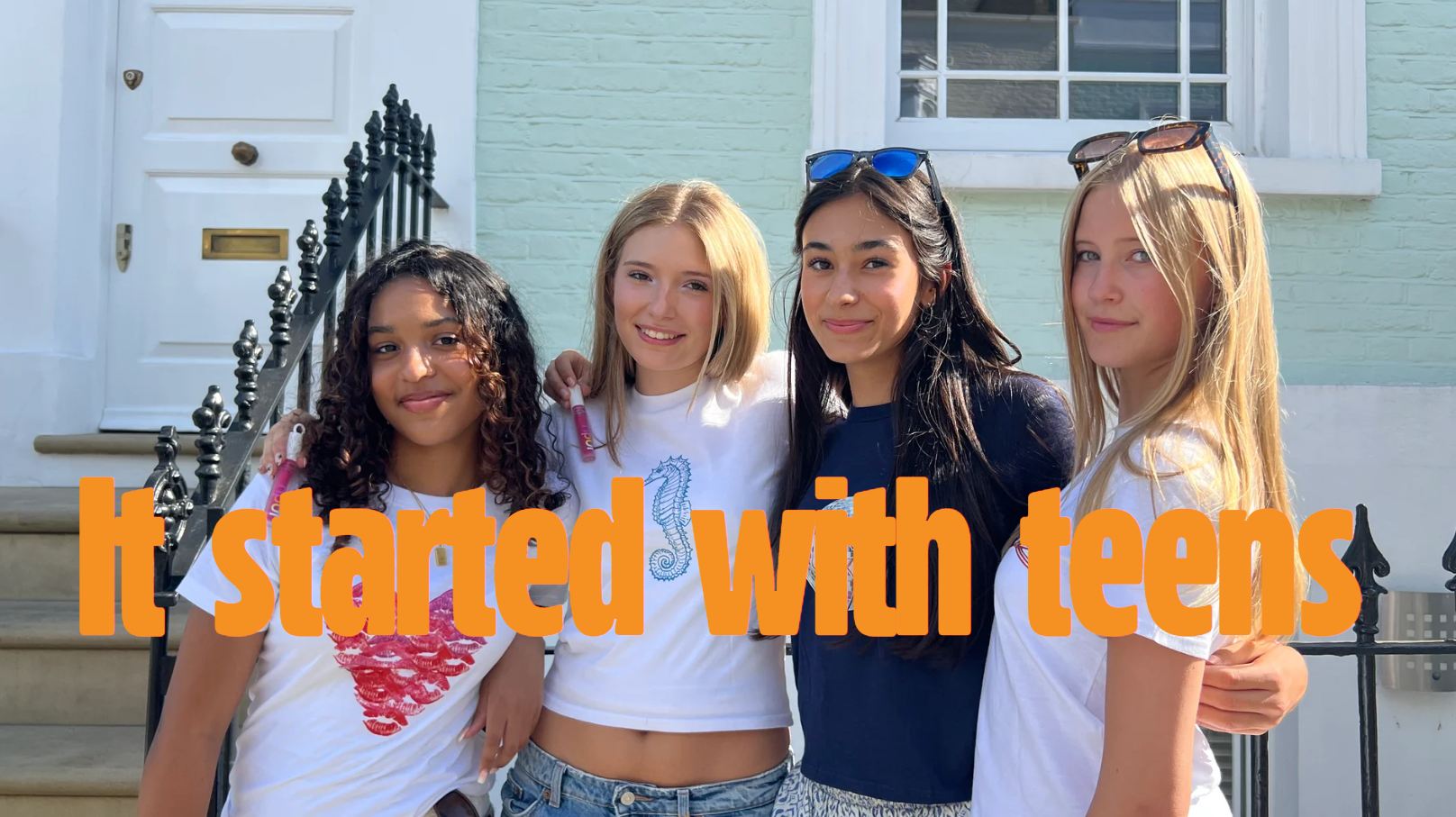
In our exploration of democratising beauty for everyone, we’ve identified a significant shift toward what we call the “proto-skintellectual”, a generation of Gen Alpha and tween consumers who are entering the skincare market as early as age eight. While viral social media trends often drive this surge in interest, our report highlights a critical market gap: approximately 25% of children aged 9-12 are inadvertently using potent adult-strength actives such as Retinol or AHAs, which can compromise their developing skin barrier. This disconnect between aggressive product marketing and actual young skin needs presents a profound opportunity for the industry to move away from “transactional” selling and toward a model of radical transparency and age-appropriate education.
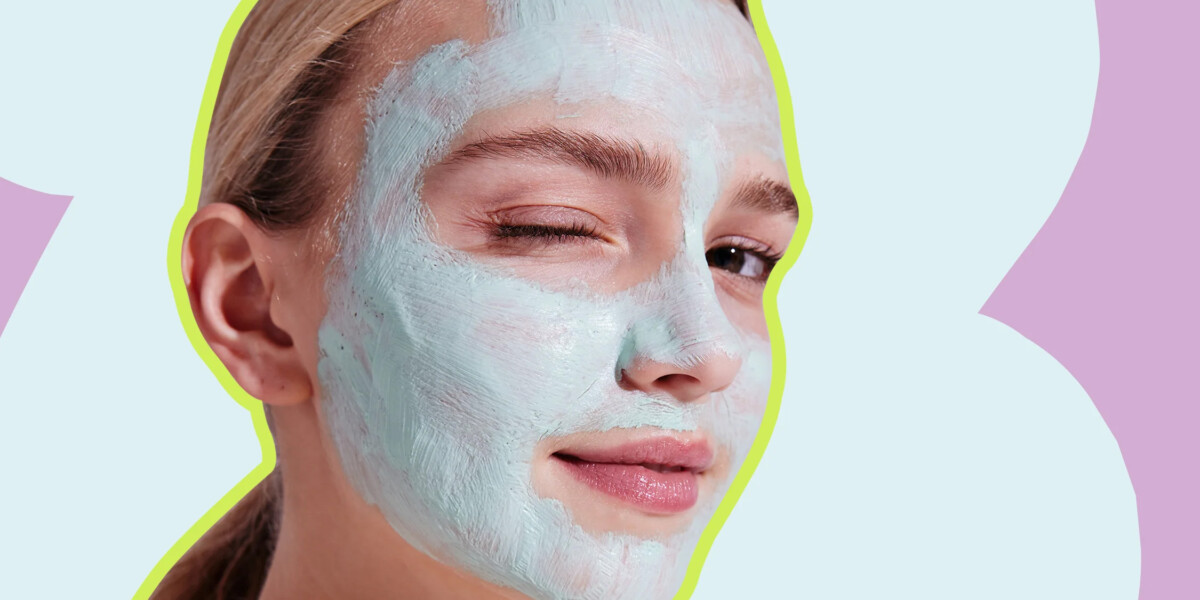
True democratisation in this sector means creating “safe-entry” brands and retail environments where young people feel seen and valued rather than pressured to “perfect” their appearance. As a retail design agency, we are inspired by brands like indu and Spots & Stripes, which are pioneering a new standard of inclusivity by building simple, positive routines that focus on confidence and healthy habits rather than anti-aging.
By integrating authentic representation, such as teen advisory boards and clean, dermatologically-sound formulas, brands can empower this new generation to navigate the overwhelming beauty landscape with autonomy. Ultimately, the future of tween skincare isn’t about transformation; it’s about providing the tools for “proto-skintellectuals” to cultivate a sense of belonging and self-esteem that will last a lifetime.
The Texture gap
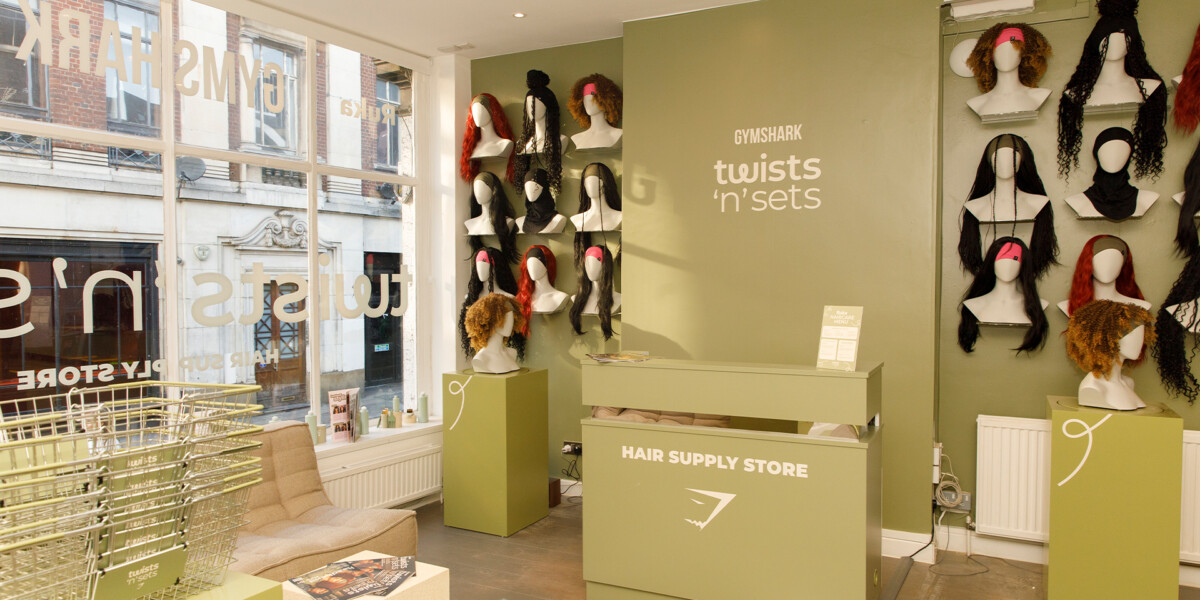
For Black History Month, Gymshark opened a specialised pop-up in London called ‘Twists ‘N’ Sets’ at 2 Hoxton Street in Shoreditch, designed to address a key barrier to fitness within the Black community.
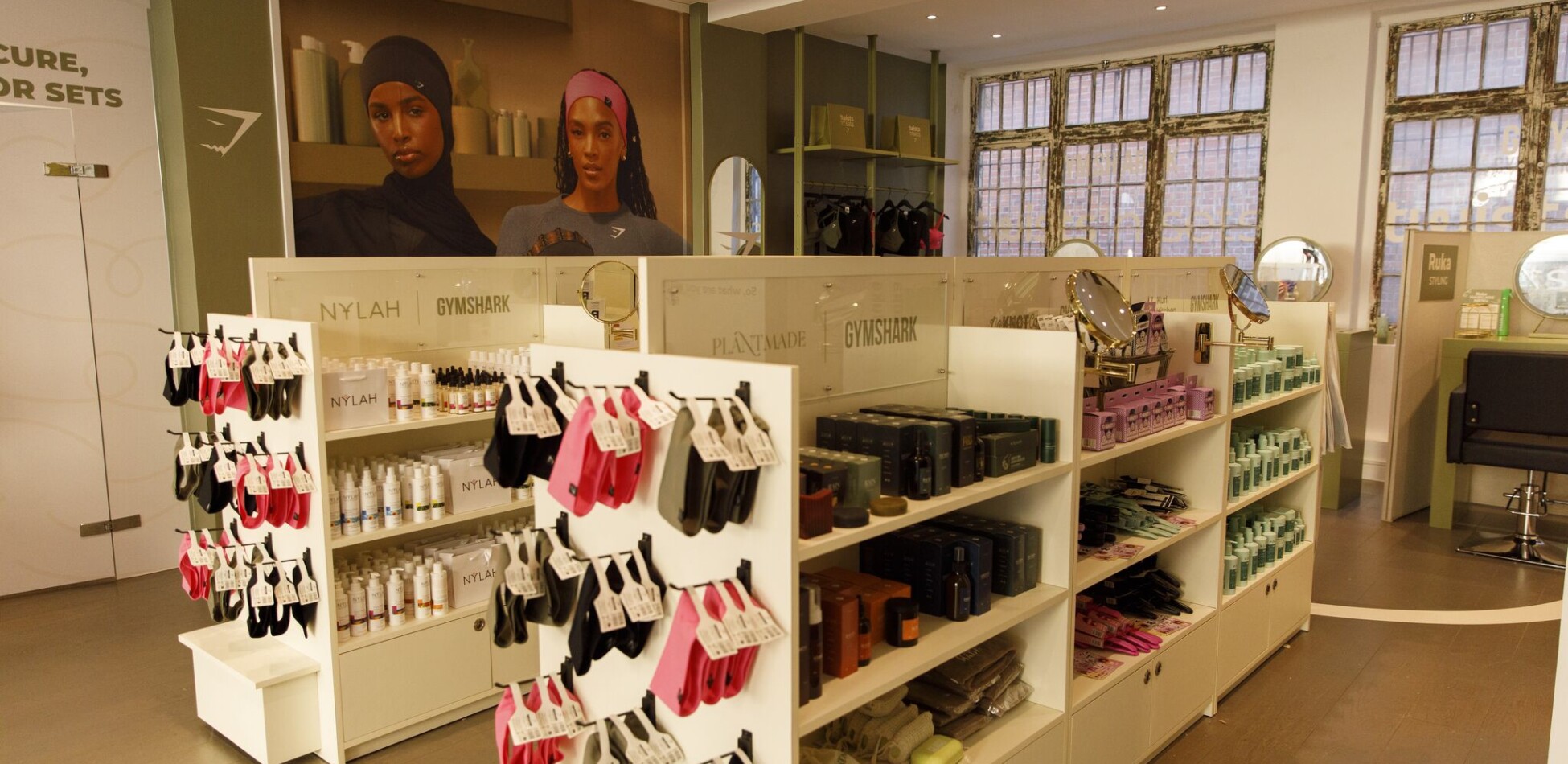
The initiative, which ran over three days in partnership with Ruka Hair, was established to help remove the obstacle of hair maintenance concerns, a factor that research showed was preventing 45% of Black women from attending the gym. ‘Twists ‘N’ Sets’ offered attendees complimentary 1-2-1 hair appointments with a trichologist and a selection of free express hair styling services.
The space served as a retail platform for eight black-owned hair care brands, including Treasure Tress and Nylah’s Naturals, alongside selling Gymshark’s popular ‘Diffuse Sweat Headband,’ which was designed with textured hair in mind. This pop-up was a crucial brand action that went beyond transactional retail, offering valuable advice, services, and products to support its community in overcoming barriers to fitness without compromising on style.
K-BEAUTY
As a retail design agency, we understand that the democratisation of beauty is a global movement, one that is being accelerated by the worldwide influence of K-Beauty. This systemic shift is not just about the products themselves but about how they are presented and accessed through intentional retail environments. We have played a pivotal role in this expansion, designing and delivering three distinct K-Beauty destinations across the globe: pureseoul, Etude House, and Korea Town. Each of these spaces serves as a physical manifestation of democratisation, moving beyond traditional, exclusive beauty standards to create “beauty playgrounds” that invite play, testing, and a deep emotional connection with a diverse consumer base.
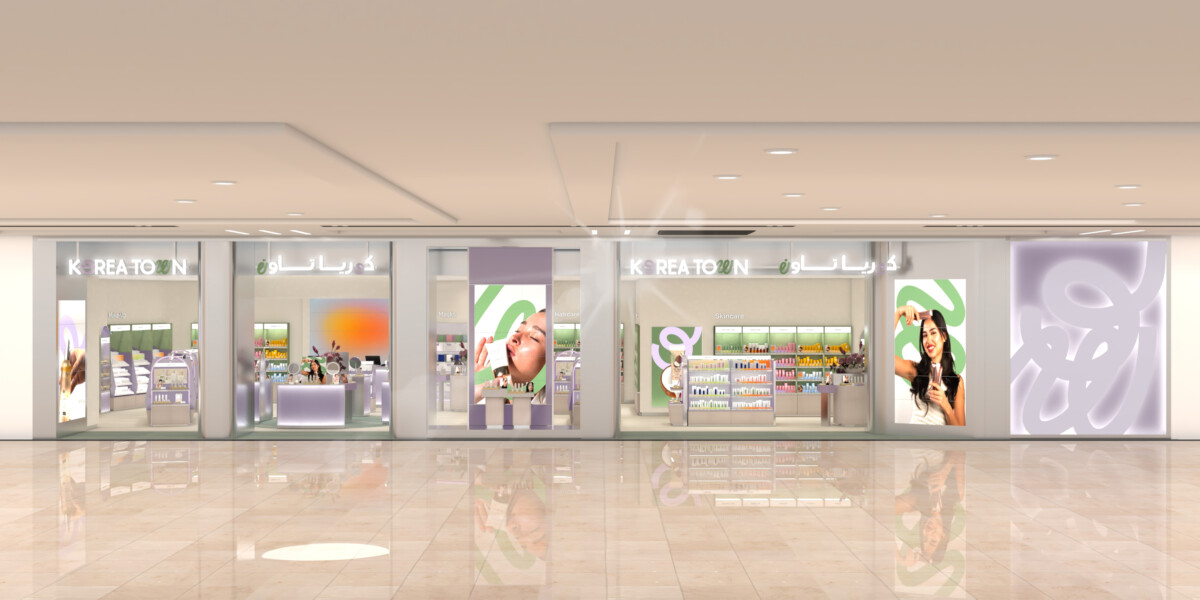
Our work with these brands highlights how the joy economy aesthetic is being used to dismantle barriers to entry. In our pureseoul and Etude House projects, we focused on creating vibrant, inclusive environments that cater to the skintellectual needs of modern shoppers while maintaining a sense of accessible fun. Korea Town further exemplifies this by acting as a cultural hub that brings the best of K-Beauty to a wider audience, ensuring that high-performance, innovative care is a lived experience for everyone. These stores are more than just points of sale; they are inclusive ecosystems that learn, adapt, and respond to the individual. By merging the biology of the product with biotechnology in-store, we are helping to redefine the beauty standard, ensuring that innovation and self-expression are accessible and felt by all.
The democratisation of beauty is shifting the industry toward radical inclusivity, where innovation serves to dismantle traditional barriers for all demographics. As a retail design agency, we’ve seen this manifest through diverse examples that prioritise community, culture, and personalised care over rigid standards.
As we look ahead, beauty is moving from surface to system and from ritual to intelligence. The next era won’t be bottled; it will be an ecosystem that learns, adapts, and responds to the individual while honoring the planet. Innovation will continue to drive us, but purpose must guide us, ensuring that every touchpoint is rooted in care and every innovation is conscious.